Company Logo
Cart 0 Account
Skincare

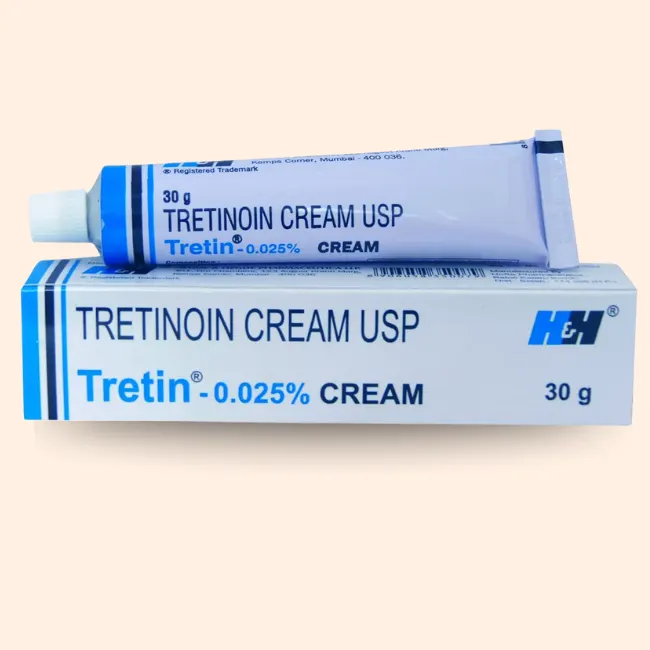
Tretinoin Cream 0.025%

4.8

For mild acne, Tretinoin Cream 0.025 is a short-term solution that can be helpful for beginners. Tretinoin 0.025 avialable in stock at just $30/tube

Fast & discreet shipping Satisfaction guarantee Doctor-recommended
Choose quantity
Price
$ 75 AUD
Limited-time coupon — use code GLOW10 for 10% off
Express shipping 1–3 business days
Discreet packaging Plain outer parcel
Secure checkout Encrypted & PCI-safe

What is Tretinoin Cream 0.025%?

Tretinoin Cream 0.025% is a topical prescription medicine containing 0.025% (0.25 mg/g) of tretinoin — the biologically active, acid form of vitamin A (all-trans retinoic acid). It is the lowest clinically used strength of tretinoin and is commonly prescribed as a starting dose, particularly for patients new to retinoids, those with sensitive skin, or those who experienced irritation at higher concentrations.

In Australia, tretinoin is classified as a Schedule 4 Prescription Only Medicine under the Therapeutic Goods Administration (TGA). It cannot be purchased without a valid prescription from a registered Australian medical practitioner. This classification reflects that it is a potent, active pharmaceutical ingredient with specific indications, side effects, and contraindications — including a strict requirement to avoid use in pregnancy.

Branded vs compounded tretinoin in Australia

The branded Stieva-A 0.025% cream was withdrawn from the Australian Register of Therapeutic Goods in April 2025 by its sponsor, GlaxoSmithKline. Tretinoin 0.025% continues to be available in Australia as a compounded preparation made to order by registered Australian compounding pharmacies under a valid prescription. ReTrieve® Cream (tretinoin 0.05%) is a still-registered branded option at a higher strength, prescribed where the higher concentration is clinically appropriate.

What tretinoin cream 0.025% treats

Tretinoin 0.025% is prescribed in Australia for three primary indications, often overlapping in the same patient.

Acne vulgaris :

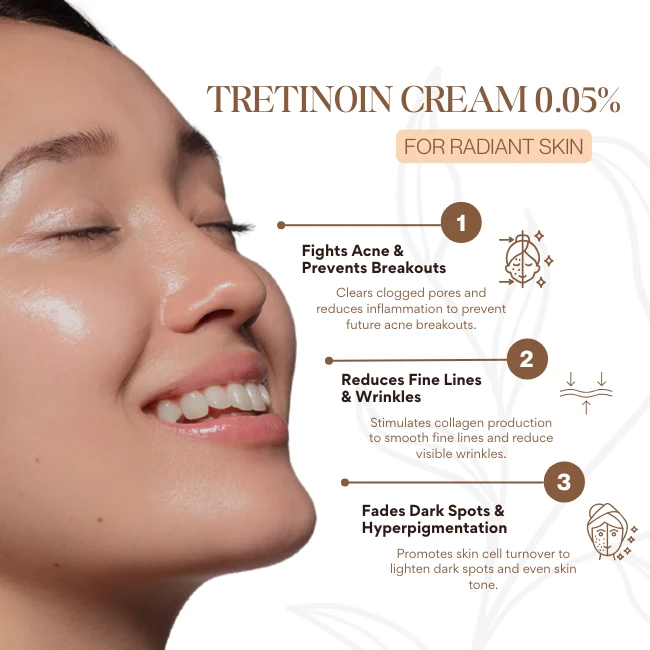
Tretinoin is a first-line topical treatment for mild to moderate acne — particularly non-inflammatory acne (comedones, blackheads, whiteheads) and mild inflammatory acne (papules and pustules). It works by normalising the way cells inside hair follicles shed, preventing the build-up that creates the microcomedone — the starting point of every pimple. Unlike antibiotics or benzoyl peroxide, tretinoin treats acne at the root cause and helps prevent new lesions forming, not just dry out existing spots. See our full guide: Tretinoin for Acne in Australia.

Photoaged and sun-damaged skin :

In Australian patients — where cumulative UV exposure is among the highest in the world — photoageing (UV-induced fine lines, roughness, mottled pigmentation and laxity) is one of the most common reasons tretinoin is prescribed. At 0.025%, tretinoin stimulates collagen production in the dermis and speeds up the shedding of surface cells damaged by years of sun exposure. Visible improvement in skin texture and firmness builds over 6–12 months of consistent use.

Hyperpigmentation, dark spots and melasma :

Tretinoin accelerates cell turnover, which disperses concentrated melanin and moves pigmented cells to the surface where they are shed sooner. It also inhibits the transfer of melanin between cells. For this reason, it is frequently included in combination treatment regimens for melasma, post-inflammatory hyperpigmentation (PIH), and age spots — often combined with a hydroquinone or niacinamide formula under dermatological supervision. More detail: Tretinoin for Pigmentation & Melasma.

How tretinoin 0.025% works

Key fact: Tretinoin is not a surface exfoliant. It penetrates skin cells and binds to retinoic acid receptors (RARs) in the cell nucleus, switching genes on and off that govern cell turnover, pore shedding, and collagen production. Everything tretinoin does flows from this single receptor-binding event.

The three downstream effects of receptor activation are:

  1. Faster, more organised epidermal cell turnover — fresh cells replace old, dull, or pigmented ones more rapidly, improving radiance and texture.
  2. Normalised follicular shedding — pore linings shed properly, preventing the cell clumping that causes comedones and acne.
  3. Collagen synthesis and MMP inhibition — fibroblasts are stimulated to produce type I and III collagen while the UV-activated enzymes that break collagen down (matrix metalloproteinases) are suppressed.

For a full scientific explanation, see How Tretinoin Works on Skin: The Science Behind the Results.

How to use tretinoin cream 0.025%

Always follow your prescribing doctor's specific instructions. The guidance below reflects standard clinical practice in Australia.

Step-by-step application guide

  1. Cleanse gently. Wash your face with a mild, non-stripping cleanser. Avoid scrubs, exfoliating acids, or hot water on the same night.
  2. Pat completely dry. Wait at least 20–30 minutes after cleansing. Applying tretinoin to damp skin significantly increases penetration and, with it, the risk of irritation.
  3. Apply a pea-sized amount. A pea-sized amount (approximately 0.5 cm) is enough for the entire face. Dot onto forehead, cheeks and chin; spread in thin, even strokes. Avoid the corners of the mouth, nostrils and under-eye area unless specifically directed.
  4. Follow with moisturiser. Apply a gentle, fragrance-free moisturiser directly over the tretinoin to buffer dryness. This does not substantially reduce tretinoin efficacy.
  5. Apply SPF 50+ every morning. Non-negotiable. Tretinoin increases photosensitivity, and UV exposure activates the same collagen-degrading enzymes tretinoin suppresses. In Australia's high-UV climate, daily SPF 50+ broad-spectrum sunscreen is essential.

Starting frequency

Do not start with nightly application. Begin on alternate nights (every second or third night) for the first 2–4 weeks to allow your skin to adjust, then increase to nightly use once tolerability is established. If irritation persists, maintain the lower frequency until your next review.

What to avoid while using tretinoin

  • Other topical actives on the same night (AHAs, BHAs, benzoyl peroxide, vitamin C serums, retinol) unless your doctor specifically advises otherwise
  • Physical scrubs and exfoliating tools
  • Waxing on treated areas (tretinoin thins the surface layer — waxing can remove skin)
  • Tanning beds or prolonged unprotected sun exposure
  • Combination with other prescription retinoids

What to expect — tretinoin 0.025% results timeline

Tretinoin works by changing gene expression and rebuilding tissue — not by surface reaction. Results are biological in pace, not cosmetic.

Timeframe What's happening What you may notice
Weeks 1–4 Cell turnover accelerates; skin adjusts to the new rate Dryness, mild flaking, possible redness; some experience a tretinoin purge (temporary increase in breakouts)
Weeks 4–8 Skin adapts to the higher turnover rate Irritation settles; texture begins to improve; new breakouts slow
2–4 months Pore normalisation established; surface pigmentation dispersing Clearer, smoother skin; early fading of dark spots; more even tone
4–6 months Continued collagen synthesis and pigmentation improvement Noticeable reduction in fine lines; hyperpigmentation significantly lighter
6–12 months+ Dermal collagen remodelling fully established Improved firmness and skin density; long-term anti-ageing benefit

Side effects of tretinoin cream 0.025%

Common side effects (expected during adjustment)

  • Dryness and peeling — the most frequent side effect, especially in weeks 1–6. Using a buffer moisturiser and reducing application frequency manages this effectively.
  • Redness and mild irritation — particularly around the mouth, nostrils and eyes. Avoid applying tretinoin directly to these areas.
  • Stinging or warmth on application — common initially; usually resolves as skin adapts.
  • Temporary skin purging — an increase in breakouts in the first 4–8 weeks as pre-existing clogged pores are brought to the surface faster. This is a sign of the medication working, not a reason to stop. See Tretinoin Purge vs Breakout: How to Tell the Difference.
  • Increased sun sensitivity — makes SPF 50+ non-negotiable in Australia's UV climate.

Less common side effects 

  • Temporary changes in skin colour (lightening or darkening) at the application site — usually reversible
  • Blistering or crusting with overuse or on damaged skin
  • Severe allergic reaction (rare) — stop use and seek medical attention

Most side effects are dose-dependent and application-technique-dependent. Using the correct amount (pea-sized), applying only to dry skin, and starting on alternate nights substantially reduces severity. Report any concerning or persistent side effects to your prescribing doctor.

Who should not use tretinoin cream 0.025%

Tretinoin is contraindicated in the following situations. This is not an exhaustive list — your prescribing doctor will assess your full medical history before prescribing.

  • Pregnancy. Tretinoin is teratogenic. It must not be used during pregnancy. Discontinue before attempting to conceive and discuss alternatives with your doctor or obstetrician.
  • Breastfeeding. Due to potential absorption and unknown risk to the infant, tretinoin should not be used while breastfeeding.
  • Hypersensitivity to tretinoin or vitamin A derivatives. Known allergy to any retinoid is a contraindication.
  • Active eczema, rosacea, seborrhoeic dermatitis or perioral dermatitis. Tretinoin can exacerbate inflammatory skin conditions. Use must be supervised and often deferred until the condition is controlled.
  • Sunburnt, windburnt or broken skin. Do not apply to compromised skin — wait until it has healed.
  • Concurrent use with other prescription retinoids. Using multiple retinoids simultaneously greatly increases risk of toxicity and irritation.
Questions answered

Frequently asked questions

It is a prescription vitamin A cream used mainly for acne and for signs of skin ageing such as fine lines and uneven texture, where a prescriber considers it suitable. The 0.025% strength is the lowest standard concentration.
Yes — 0.025% is an effective strength and is often where prescribers start, because it tends to cause less irritation while skin adjusts. The most suitable strength depends on your skin and your prescriber's assessment, not on strength alone.
It is the lowest standard strength and is commonly used as a starting point for that reason. Your prescriber will advise the right starting strength and how to build up.
Skin-cell turnover changes within weeks, but visible improvement in acne or skin texture usually takes several weeks to a few months, and longer for ageing-related changes. See the full timeline guide for detail.
Yes — and this is especially important in Australia. Tretinoin makes skin significantly more photosensitive. UV exposure also activates the collagen-degrading enzymes (matrix metalloproteinases) that tretinoin works to suppress, directly undoing its anti-ageing benefit. Daily broad-spectrum SPF 50+ sunscreen is a clinical requirement, not an optional add-on. See Tretinoin and Sun Protection in the Australian Sun.
Tretinoin can improve the appearance of post-inflammatory hyperpigmentation (the dark marks left after acne) by accelerating cell turnover and dispersing concentrated melanin. It has a more limited effect on raised (hypertrophic) or pitted (atrophic) acne scars, which may require additional treatments. Your dermatologist can advise on a combined approach.
No. Tretinoin is contraindicated during pregnancy and breastfeeding. Retinoids are teratogenic and must be discontinued before attempting to conceive. If you are pregnant, planning pregnancy, or breastfeeding, do not use tretinoin and speak to your doctor before starting or continuing any retinoid treatment.
Tretinoin 0.025% is half the concentration of the 0.05% strength. Both contain the same active molecule and work via the same mechanism — the difference is potency and, typically, the degree of initial irritation. Most prescribers start new users or sensitive-skin patients at 0.025% and increase to 0.05% once tolerability is established.
Most people see initial improvements in acne within 6–12 weeks of consistent nightly use. Significant texture and pigmentation improvements typically take 3–6 months. Anti-ageing collagen benefits become noticeable after 6–12 months. Individual results vary by skin type and condition severity.
Yes — 0.025% is the lowest commonly prescribed strength and is often recommended as a starting point for sensitive skin. Beginning on alternate nights, using a gentle moisturiser as a buffer, and avoiding other active ingredients during the adjustment period minimises irritation. Consult your prescribing doctor for a personalised approach.
Common side effects in the first 4–8 weeks include dryness, peeling, redness, mild stinging and temporary skin purging (increased breakouts as clogged pores surface). These usually settle as skin adjusts. Tretinoin also increases photosensitivity — daily SPF 50+ is essential, particularly in Australia's high-UV environment. Severe irritation or blistering should be reported to your prescriber.
Stay in the loop

Get exclusive discounts

Subscribe for member-only pricing, restock alerts, and evidence-based skincare guidance from Tretinoin Australia.

Member pricing · Restock alerts · Skincare tips · No spam, ever